
— Updated every week
Scam alerts: what is going around right now
Scammers change their tricks all the time, and they reach people everywhere, by text, WhatsApp, email and phone calls. We keep this page so you can see what is going around before it reaches you. Each alert explains the trick in plain words and tells you what to do instead. It is free for everybody, learner or not, so share it with anyone who needs it.
Has a scammer tried it on you, or on someone you know? Tell us what happened, even if it was a while ago and even if you lost nothing. Your story helps us warn other people before it happens to them. We never publish your name or personal details.
Never send us a password, PIN or code, even to show us the scam.
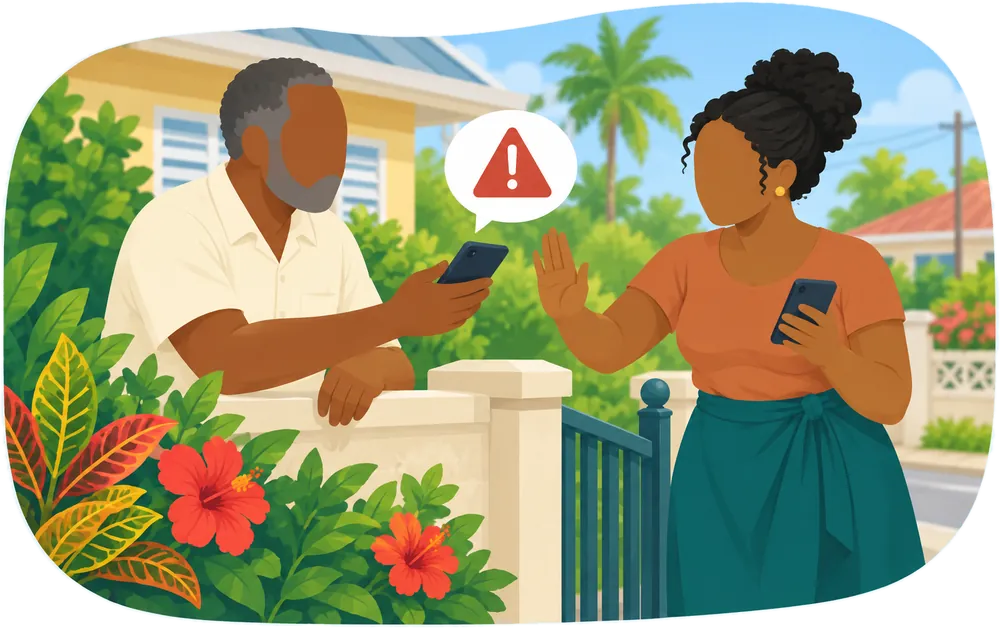
The “that does not match” bank call
A caller says they are from your bank and asks you to confirm your security answers. Whatever you say, they reply that it does not match what they have on file, so you try another answer, and another. Then they say your account is locked and they will call you back. By then they have all your answers. Your bank will never ask for your PIN, password, a code or your security answers on a call it made. Hang up, then call your bank yourself on the number on the back of your card or in its app.
A receipt for something you never bought
An email that looks like it is from Amazon says you paid US$1,899.99 for a new iPhone, and gives phone numbers to call if you did not. The numbers belong to the scammers: whoever answers asks for your card, a code, or to control your computer. If you did not order it, do not call. Block the sender and delete the email. To check, open the Amazon app or type amazon.com yourself and look at Your Orders. Numbers in the email we received: +1 (813) 934-5696 and +1 (864) 856-2120.
The parcel delivery fee text
A message says a package is waiting and asks for a small delivery fee through a shortened link. Real couriers do not collect fees this way. If you are expecting a package, go to the courier's own website or call them.
Fake bank security warning
A text warns of an unusual login and gives a deadline before your account closes. Banks do not close accounts by text. Never tap the link. Open your banking app yourself, or call the number on your card.
Prize draw you never entered
You have won, but first you must send a processing fee, your Taxpayer Registration Number (TRN) or your bank details. A real prize never asks you to pay to collect it.
The stranded relative voice note
A voice that sounds like family asks for money urgently and not to tell anyone. Voices can be cloned from a few seconds of audio. Hang up and call the person back on the number you already have.
Got a message you are not sure about?
Signed-in learners can paste it into our Is this a scam? checker. Our AI helper points out the warning signs in plain words, and never tells you a message is safe.
— Stay a step ahead
Learn the pattern, not just the scam
Scams change every month, but the tricks behind them do not: urgency, a threat, a link, a request to keep quiet. Track B teaches the pattern, so a new scam does not catch you.